1
Publish one shipping truth
The public window (for example X–Y days), when tracking appears, and the refund rule if a package is late. This is the only ETA language allowed in comments.

Shipping pile-ons, “is this a scam?” attacks, and rival store bait: the Meta ad problems long-ship models actually get.
6 min read · Published Aug 8, 2026
The vertical
Dropshipping ads attract a tougher comment mix than a typical branded DTC store. Buyers cannot see a warehouse with your name on it, so they stress-test trust in public: “is this legit?”, “AliExpress markup?”, “still waiting after three weeks.” Those comments sit under the same creative you are paying to show the next hundred people.
A thread full of unresolved delivery complaints teaches every new viewer to expect delay. Hiding real customers is not the fix. The working model is a sharper split: pre-purchase policy questions stay public and fast; order-specific details move to a named support path after a short acknowledgment; coordinated bait and redirect spam leave the thread.
This guide is the dropshipping version of comment moderation: the comment types that matter, the rule for each, and a daily setup that does not invent ROAS numbers or claim live Shopify order sync. For the general ecommerce system behind it, see our ecommerce comment moderation guide. For scam-link patterns that hit every store, see stop scam comments on Facebook ads.
The threat map
“Is this a scam?” and AliExpress accusations need a split call. Some are coordinated bait or copy-paste spam paired with a redirect. Some are real buyers who want proof. Hide the repeated spam pattern, not the word scam by itself. Answer genuine skepticism once with what you can prove: shipping window, refund policy, tracking expectations, and store identity.
Delivery comments require customer verification, not a keyword rule. “Where is my order?”, “three weeks and nothing”, and “still waiting” may be genuine support tickets. Do not auto-hide them because they contain a delay phrase. Acknowledge the customer, move the order number and personal details to support, and keep a short public policy answer available for people asking before they buy.
Rival dropshippers plant faster-delivery bait. “I got the same thing from [store] in three days”, competitor tags, coupon codes for someone else’s listing. That is not a customer conversation. Hide it. Ban repeat accounts when you can. Your paid traffic should not become their storefront.
Product questions are still the conversion window. Sizing, material, color, what’s in the box, returns before purchase. These buyers are deciding now. Answer from your approved product facts and shipping policy. Do not invent stock or custom ETAs you cannot keep.
Link spam and fake “cheaper here” shops ride winning creatives. Phishing pages using your photos, affiliate dumps, “found cheaper” with a suspicious URL. Hide on sight. This overlaps general scam work, but dropshipping creatives that go viral attract it faster because margins and lookalike products are the whole category.
The rule set
Hide on sight: copy-paste legitimacy bait paired with a redirect, rival store promotions, phishing and “cheaper here” links, affiliate spam, and abuse. No public debates with trolls.
Answer in public from approved facts: product details, sizing, what’s included, return policy, and the published shipping window. Every reply comes from that source, not from a guessed tracking number.
Move off the ad (human + support): missing packages, refund disputes, chargeback language, and anything that needs an order ID. Acknowledge the customer publicly, keep the comment visible unless it becomes abusive, then handle private details in support.
Leave alone: routine praise, emoji noise, and questions already answered further down the thread.
Putting it together
Here is the weekly shape of a working dropshipping moderation setup, whether you run it manually or with a tool.
The public window (for example X–Y days), when tracking appears, and the refund rule if a package is late. This is the only ETA language allowed in comments.
Use repeated phrases together with redirect domains, rival store names, affiliate patterns, and known spam behavior. Do not block broad words like scam, late, order, or shipping by themselves.
Decide who acknowledges “where is my order”, where the buyer should send order details, and who closes the loop. The comment tool’s job is to route the public signal safely, not to replace your helpdesk.
Sort comments into legitimacy bait, shipping pile-ons, rival store spam, product questions, real disputes, and noise. Most stores find the same pattern: a few real tickets hiding inside a lot of poison.
Check for false positives, especially buyers asking a fair pre-purchase shipping question that tripped a broad keyword. Unhide those. A believable policy answer beats a silent thread.
Run this and the ad thread stops working against you: bait gone, product questions answered while the buyer is warm, and real order problems handled where they belong.
How Argus fits
The dropshipping split should run as a system, not a tab you check after CPMs rise. That is what Argus automates for Meta ads.
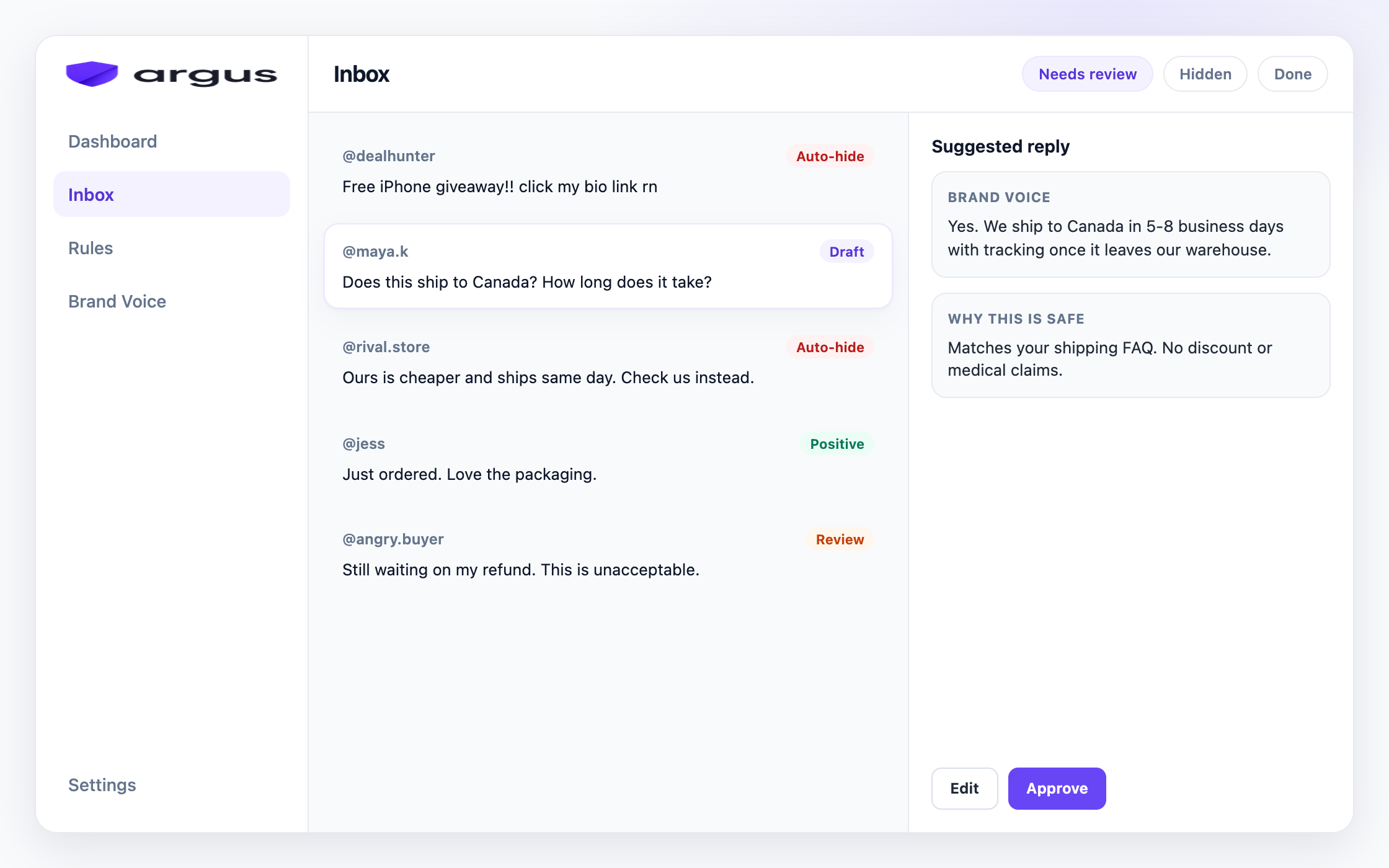
Argus classifies every comment under your Facebook and Instagram ads into categories like spam, scam, toxic content, competitor bait, buyer questions, complaints, and sensitive topics. Your Protection board sets one standing action per category (Auto-hide, Draft for review, Reply & send, Human review, or Do nothing), so rival-store spam and clear bait can Auto-hide around the clock while real order disputes stay on Human review.
Product and shipping-policy questions get grounded reply drafts written from your Brand Voice knowledge: your published windows, returns terms, and product facts, with sources shown on every draft so you can verify before anything posts. Draft for review is the default. Safe Autopilot is a narrow opt-in for high-confidence FAQ matches only, and it never touches complaints or sensitive comments by design.
Argus covers public comments on Facebook and Instagram ads. It hides from public view rather than deleting, it does not automate DMs, and it does not pull live Shopify orders or tracking numbers. If your queue mixes redirect spam, real delivery issues, and repeat product questions, that is the job it was built for.
FAQ
Not automatically. Treat it as a real customer issue until a human checks. Acknowledge the customer, move order details into support, and keep a short pre-purchase shipping-policy answer public. Hide only when the comment is confirmed spam, abuse, or coordinated bait.
Hide repeated spam or redirects, not the phrase by itself. Answer genuine skepticism once with verifiable facts: shipping window, refund policy, and how tracking works. Do not promise delivery you cannot keep.
Some tools market that integration. Argus does not. It moderates public Meta comments and drafts replies from the knowledge you give it. Order lookup stays in your helpdesk or store admin.
General ecommerce moderation covers spam, buyer questions, and complaints. Dropshipping adds a harder legitimacy test because a real delivery complaint and coordinated scam bait can use the same words. Acknowledge real customers publicly, move order details to human support, and hide only confirmed spam, abuse, or coordinated redirects.
No. Argus moderates public comments and drafts public replies. Moving a dispute to a private channel is still a human step.
Hide the bait, answer the product questions, and keep real order problems in support.