Why does fashion moderation start with the launch calendar?
Fashion moderation changes whenever the assortment and creative change. A new denim launch produces fit and inseam questions. A size-inclusive campaign can attract abuse aimed at the model. A recognizable accessory can draw counterfeit sellers. A static year-round rule set misses that context.
The practical job is launch operations. Before spend rises, the moderator needs the current size chart, garment-specific fit notes, fabric and care facts, returns policy, and the names or phrases used by counterfeit and unauthorized sellers. During the launch, those facts determine what gets answered, hidden, or handed to a person.
This page owns that launch-day system. The ecommerce guide explains the broader classify-then-act model, while the luxury guide focuses on provenance, gray-market bait, and a tightly controlled service voice. Here the priority is keeping fast-moving product and campaign context attached to every decision.
The threat map
What belongs in a fashion launch queue?
Counterfeit redirects are a clear removal case. Off-platform catalogs, copied-product links, unauthorized reseller tags, and competitor coupons use your campaign to divert shoppers. Hide the comment, record the phrase or domain, and review whether the same account is appearing across several active ads.
Appearance-based abuse is not product criticism. Comments attacking a model's body, identity, or inclusion in the campaign do not help another shopper judge the garment. Hide them without quoting or debating the abuse. Keep criticism about cut, fit, styling, or quality visible when it is expressed without attacking a person.
Fit questions require garment-level facts. A general size chart cannot answer whether one blazer is oversized, one dress has stretch, or one trouser has a shorter inseam option. Route these comments to the notes for the advertised item. If the fact is missing, say so and send it to the product team instead of guessing.
Fair quality complaints should stay visible. A buyer reporting poor stitching, color transfer, or a fit mismatch is different from a drive-by insult. Acknowledge the issue, move order details to support, and keep the public response factual. Hiding a real product complaint can make the rest of the thread less credible.
Launch spikes expose stale rules quickly. New products, creator collaborations, seasonal sales, and catalog ads can spread comments across many active creatives at once. Review by advertised item and comment type, not only by newest comment. That makes a repeated sizing gap or counterfeit phrase visible while the campaign is still running.
The rule set
How should you decide each fashion comment?
Hide on sight: counterfeit promotions, off-platform catalog links, unauthorized reseller bait, phishing links, appearance-based abuse, and threats. Do not amplify them with a public argument.
Answer from approved facts only: sizing charts, fit notes (“runs oversized, size down”), fabric and care, stock and colorways, shipping and returns. Every public reply, human or drafted, comes from that source.
Always a human: quality complaints tied to a real order, refund disputes, campaign backlash, and anything that sounds legal or safety-related. Public acknowledgment may still be right. The resolution path stays with a named person.
Leave alone: routine style praise, emoji noise, and questions already answered further down the thread. Not every comment needs a second reply.
Putting it together
What should happen before, during, and after a fashion launch?
Run moderation on the same calendar as the launch. The queue should be ready before the first paid impression, then change as the thread reveals new questions and abuse patterns.
1
Attach facts to the advertised products
Load the current size chart, item-level fit notes, fabric and care details, availability language, returns policy, and approved product links. Retire facts from the previous collection so they cannot leak into a new reply.
2
Define the campaign's removal rules
List known counterfeit domains, unauthorized seller patterns, competitor coupon phrases, and the appearance-based abuse that should never remain public. Keep broad fit or quality words out of automatic rules.
3
Sample every active creative after launch
Check the first comments on each product or creator variation. One ad may attract fit questions while another attracts abuse or replica sellers. Update routing from what appears instead of assuming the whole campaign has one pattern.
4
Escalate product signals, not only tickets
If the same fit, fabric, or quality concern repeats, send the pattern to merchandising or CX with the affected item and creative. The moderation queue can reveal missing product information before the returns report does.
5
Close the launch with a rule review
Review hidden comments for real shoppers caught by a broad rule, unhide mistakes, and carry only proven seller domains and abuse patterns into the next campaign. Keep item-specific facts with the item.
Run this and the thread starts working like a second product page: knockoffs gone, sizing answered while the buyer is warm, and real quality issues handled like the support work they are.
How Argus fits
Can Argus keep one queue across every fashion ad?
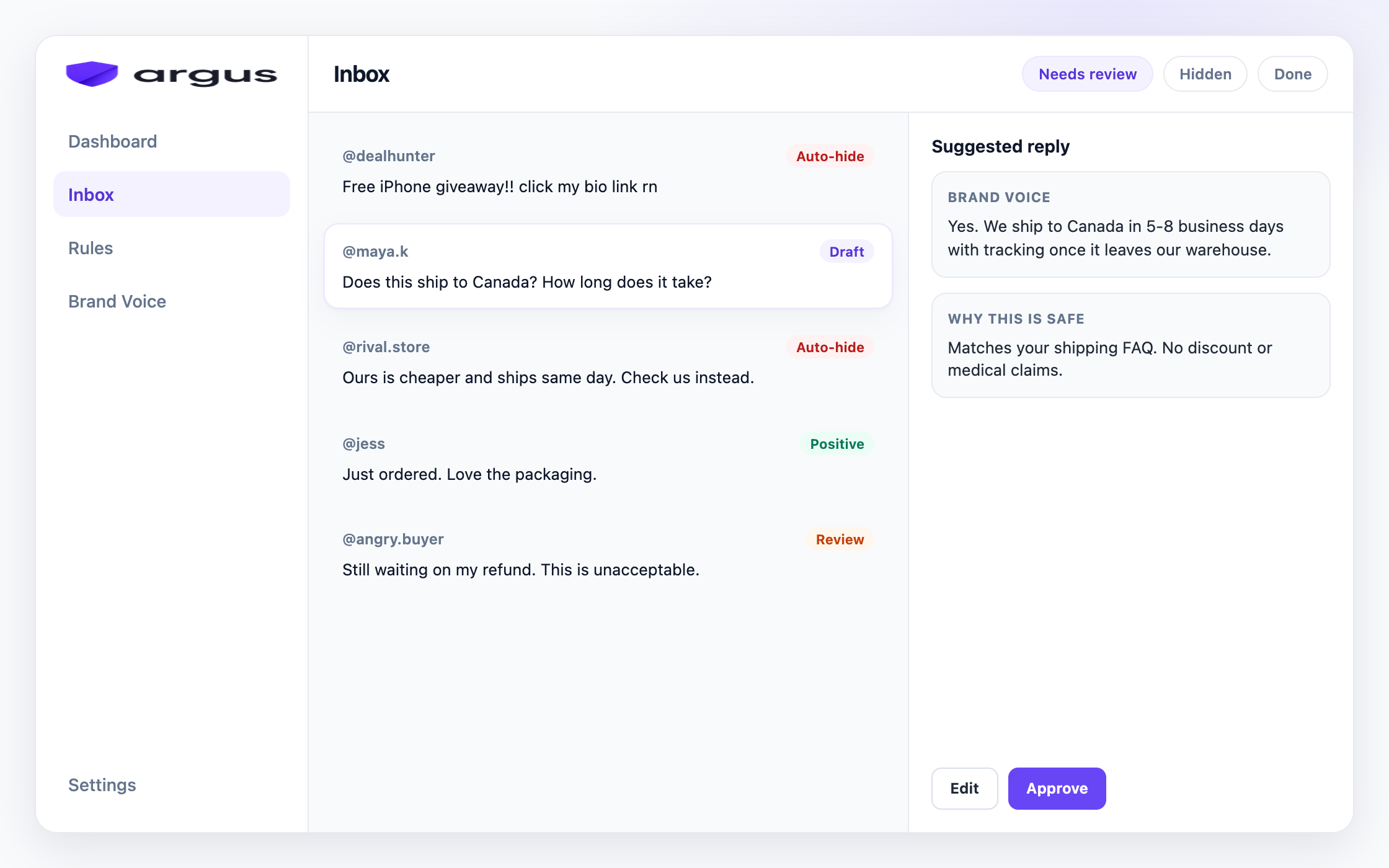
Argus gives the launch team one place to separate clear harm, buyer questions, and comments that need a person across active Meta ads.
Argus classifies every comment under your Facebook and Instagram ads into categories like spam, scam, toxic content, competitor bait, buyer questions, complaints, and sensitive topics. Your Protection board sets one standing action per category (Auto-hide, Draft for review, Reply & send, Human review, or Do nothing), so replica spam and body-shaming can Auto-hide around the clock while real quality complaints stay on Human review.
Sizing and FAQ-style questions get grounded reply drafts written from your Brand Voice knowledge: your size charts, fit notes, fabrics, and policies, with sources shown on every draft so you can verify before anything posts. Draft for review is the default. Safe Autopilot is a narrow opt-in for high-confidence FAQ matches only, and it never touches complaints or sensitive comments by design.
Argus covers public comments on Facebook and Instagram ads. It hides from public view rather than deleting, it does not automate DMs, and it never invents product claims. If your launch queue mixes counterfeit redirects, fit questions, and real quality issues, that is the job it was built for.
FAQ
What else should I know?
Should I hide replica seller comments under fashion ads?
Yes. Hide counterfeit redirects, copied-product links, and unauthorized catalog promotions. Record repeat phrases or domains so the same pattern can be caught across the campaign.
What about body-shaming on size-inclusive campaigns?
Hide it. That is not product feedback. Do not debate the commenter in public. Keep fair fit notes and style opinions visible when they are about the garment, not the person.
Can AI answer sizing questions accurately?
Yes, when the draft is grounded in your size chart and fit notes and you review it first. It should never invent stretch, stock, or “size up” advice that is not in your approved facts.
Should I answer “how much?” in the comments?
Decide once per brand positioning. Many mid-market brands answer publicly with a product link. Premium lines often point to the product page or move price to a private channel. Consistency matters more than the specific choice.
Should a real fit or quality complaint be hidden?
No. Keep a fair complaint visible, acknowledge it, and move order details to a human support path. Hide abuse aimed at a person, counterfeit spam, and deliberate bait, not useful product feedback.
How is this different from skincare comment moderation?
Skincare threads are dominated by reaction reports and unsafe counterfeits. Fashion threads add replica spam, body-shaming on model campaigns, and sizing/fit as the main conversion window. Both need a human path for real complaints; fashion needs an explicit hide rule for appearance-based hate.