1
Load the brand facts before the campaign
Provenance notes, materials, care, warranty, availability language, and the price-question rule for this line. Share one source of truth with everyone who will touch the thread.

Replica bait, outlet spam, and off-brand replies: how premium Meta ad threads stay curated without looking defensive.
5 min read · Published Aug 9, 2026
The vertical
When someone comments “same piece, fraction of the price, DM me” under a campaign for a high-ticket line, that is not engagement. It is a second storefront riding your paid traffic. Luxury and premium brands learn this early on Meta: the first three visible comments teach the next buyer whether the brand feels careful or careless.
Generic ecommerce moderation advice helps, then breaks. Hiding every sharp comment can look defensive on a brand that sells trust. Answering every “how much?” with a cheerful bot line can cheapen a house that built its voice over years. Replica spam is not the same job as a fair “is this real?” question from a first-time buyer.
This guide is the luxury version of comment moderation: the comment types that matter, the rule for each, and a weekly setup that keeps the thread curated without inventing performance numbers. For apparel-specific sizing and body-shaming, see the fashion guide. For the general ecommerce system, see the ecommerce comment moderation guide.
The threat map
Replica and gray-market bait is brand dilution. “Same one cheaper”, unauthorized reseller tags, “DM for catalog”, and gray-market links ride your creative and point buyers away from your channel. Hide on sight. Ban repeat accounts when Meta gives you that option. There is no keep-vs-hide debate under a paid drop.
Outlet and discount spam cheapens the room. Coupon dumpers, “wait for the sale”, and competing outlet codes are not buyer questions. They train the next reader to expect a deal. Hide the redirect. Keep genuine “is there a waitlist?” or “when does the next drop land?” questions when they are about your line.
Authenticity and provenance questions are the sale. “Is this real?”, “where is it made?”, “serial / certificate?”, “what’s the warranty?” These are high-intent buyers deciding whether to trust the ad. Answer from approved facts only, in the brand’s tone. A next-day reply often loses the moment.
Over-hiding looks defensive. Luxury buyers notice when every critical note vanishes and only praise remains. Scrubbed threads feel managed in the wrong way. Hide junk and abuse. Leave fair product questions and measured criticism visible when they are about the piece, not a smear.
Generic AI replies can sound off-brand faster than silence. Premium audiences punish tone. A chirpy auto-reply under a careful campaign does more damage than a short human answer an hour later. Draft for review is the luxury default. Auto-send only after the drafts prove they sound like you.
The rule set
Hide on sight: replica and counterfeit promotions, gray-market and unauthorized reseller bait, outlet/coupon redirect spam, phishing links, and abuse. No public arguments with a troll.
Answer from approved facts only: materials, provenance notes, care, warranty, availability, and the price-question rule for this line. Every public reply, human or drafted, comes from that source.
Always a human: client service disputes, authenticity claims tied to a real purchase, PR-sensitive pile-ons, and anything that sounds legal. Public acknowledgment may still be right; the resolution path stays with a named person.
Leave alone: routine style praise, emoji noise, and questions already answered further down the thread. Not every comment needs a second reply.
Putting it together
Here is the weekly shape of a working luxury moderation setup, whether you run it manually or with a tool.
Provenance notes, materials, care, warranty, availability language, and the price-question rule for this line. Share one source of truth with everyone who will touch the thread.
Replica phrases you already see, unauthorized reseller patterns, outlet and coupon bait, and competitor redirect language. Update it after every campaign week.
Tone, phrases to avoid, and when to move price or service issues private. Luxury quality lives in the reply, not only in the hide.
Authenticity disputes, damaged goods, and refund language go to a named person with a response-time target. The public note and the private follow-up both get tracked.
Check for false positives, especially fair authenticity or product questions that tripped a broad keyword. Unhide the mistakes. A believable thread beats a spotless one.
Run this and the thread starts working like the rest of the brand: junk gone, provenance answered while the buyer is warm, and real client issues handled like the service work they are.
How Argus fits
The luxury rule set should run as a system, not a midnight judgment call during a campaign. That is what Argus automates for Meta ads.
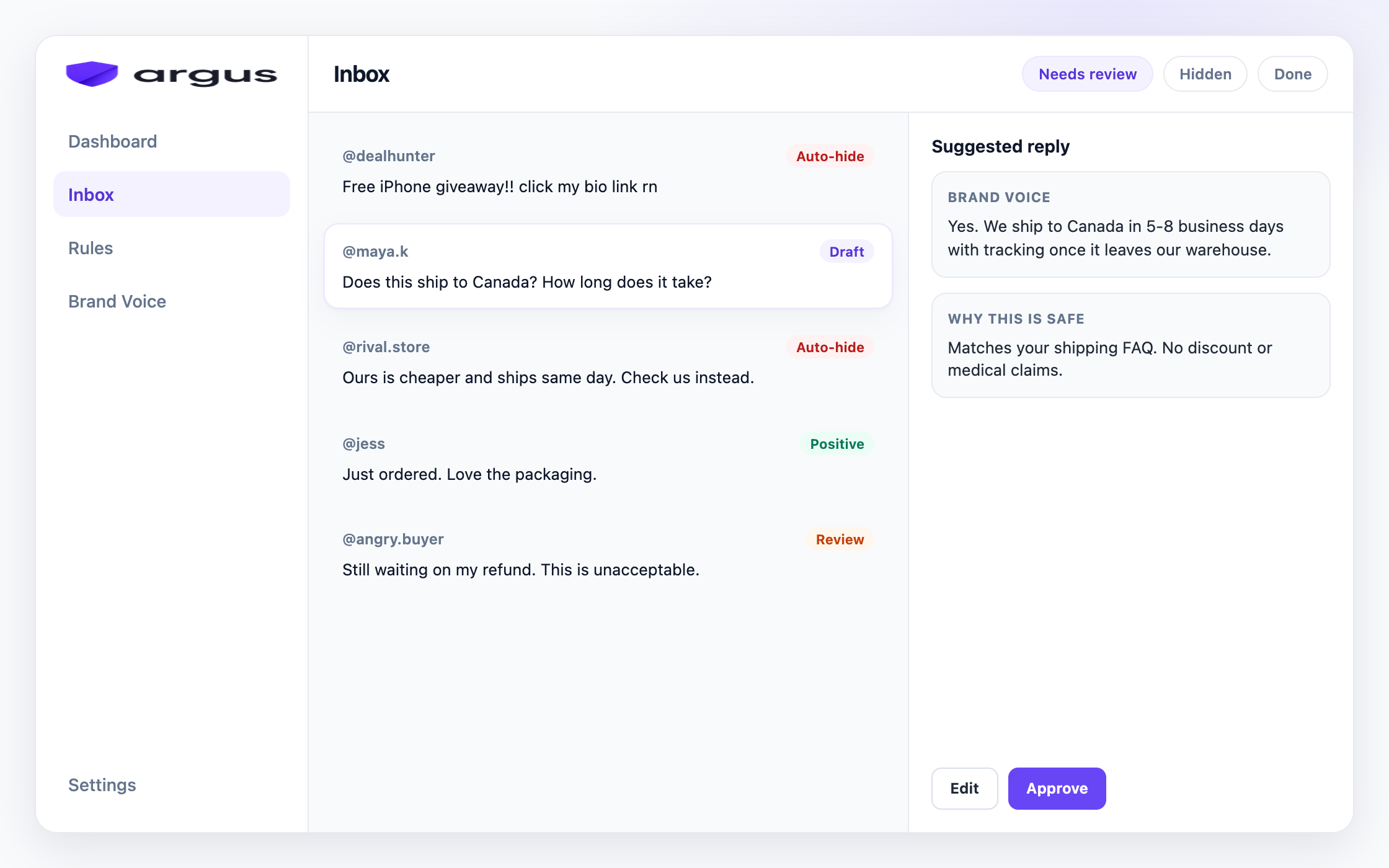
Argus classifies every comment under your Facebook and Instagram ads into categories like spam, scam, toxic content, competitor bait, buyer questions, complaints, and sensitive topics. Your Protection board sets one standing action per category (Auto-hide, Draft for review, Reply & send, Human review, or Do nothing), so replica and outlet bait can Auto-hide around the clock while real client issues stay on Human review.
Authenticity and FAQ-style questions get grounded reply drafts written from your Brand Voice knowledge: your approved product facts, provenance notes, and policies, with sources shown on every draft so you can verify before anything posts. Draft for review is the default, which matches how premium brands usually want public replies handled. Safe Autopilot is a narrow opt-in for high-confidence FAQ matches only, and it never touches complaints or sensitive comments by design.
Argus covers public comments on Facebook and Instagram ads and posts. It hides from public view rather than deleting, it does not automate DMs, and it never invents product claims. If your week is gray-market cleanup plus the same authenticity questions on repeat, that is the job it was built for.
FAQ
No. Hide replica bait, outlet spam, abuse, and smear. Leave fair product questions and measured criticism visible when they are about the piece. A fully scrubbed thread can look defensive.
Hide them on sight. They redirect paid traffic to knockoffs or gray-market sellers. Ban repeat accounts when Meta gives you that option.
Yes, when the draft is grounded in your approved facts and you review it first. It should never invent certificates, origin stories, or stock claims that are not in your knowledge.
Decide once per brand positioning. Some houses answer with a product link. Others move price to a private channel or point to the product page. Consistency matters more than the specific choice.
Fashion threads add sizing, body-shaming on model campaigns, and collection-launch spikes. Luxury threads center voice, over-hide optics, gray-market and outlet bait, and authenticity questions. Both need a human path for real client issues.
Hide the gray-market bait, answer authenticity questions, and keep real client issues with humans.