1
Define what gets hidden
Clear poaching: rival coupon codes, links to competing shops, “buy elsewhere” replies, and repeated bait from the same accounts.

Poaching or fair comparison? A policy-first guide with exact native steps, a reply framework, and the complaints that come with each choice.
6 min read · Published Aug 4, 2026
The problem
Competitor comments come in two species, and confusing them is where most teams go wrong. The first is poaching: coupon codes for a rival, “buy X instead” replies, links to competing shops, sometimes rival staff or agencies seeding doubt on purpose. The second is fair comparison: a real shopper asking “how is this different from Brand Y?”, or a past customer comparing their experience honestly.
Ads attract poaching because an ad thread is a concentration of purchase intent. Every person reading is close to buying. A rival who redirects a few percent of those readers gets your warmed audience for free, at the exact moment of decision.
The trap is treating everything as spam. Hide a genuine comparison question and you look defensive; worse, the commenter notices, and screenshots travel. The job is not a bigger hammer. It is a decision framework that separates bait from buyers, then applies the right response to each.
Method 1
Before any tool or tactic: write the rule. Most inconsistency around competitor comments comes from the decision living in whoever is online at the time.
Clear poaching: rival coupon codes, links to competing shops, “buy elsewhere” replies, and repeated bait from the same accounts.
Genuine comparison questions from real shoppers. These are buyers doing due diligence, and a calm answer can win them publicly.
Fair criticism and honest comparisons that do not mislead. Hiding these is how brands end up in a screenshots thread.
One page, three bullets, pinned in your team channel. The goal is that every person makes the same call at 2 p.m. and 2 a.m.
A policy removes hesitation and inconsistency, which are most of the problem. What it cannot do is execute itself at 2 a.m. or read every nuance for you. That is what the next two methods are for.
Method 2
For clear poaching, the native path is the same hide-plus-blocklist routine used for spam, with one big difference: your list needs to stay narrow, because your own customers mention rivals innocently all the time.
Hover the comment, choose Hide. Codes, links, and “buy elsewhere” replies leave public view without escalating.
In the Page keyword blocklist, add specific combinations: rival names paired with “code”, “discount”, “cheaper at”, and known coupon strings.
Blocking a rival's name outright hides your own customers comparing options. Block the poaching phrase, not the conversation.
Unhide false positives, and note which poaching patterns keep recurring so the list gets sharper, not bigger.
This catches named rivals and repeat patterns well. It misses the soft bait entirely: “I got this cheaper downtown”, “saw the same thing on another site for half”, with no brand name to match. Reading that as poaching requires understanding the sentence, not the strings.
Method 3
The third response is the one teams get wrong most: the public reply. Done once and calmly, it wins the thread for every future reader. Done defensively, it loses it.
A real shopper asking how you compare deserves an answer. Bait does not. If you cannot tell, treat it as Human review, not a reply.
One or two sentences on what you actually do differently: materials, warranty, shipping, price logic. Facts, not attacks. Never name-check the rival's weaknesses.
Do not stack replies or argue. One calm answer stands for everyone who reads the thread later. A back-and-forth reads as defensive no matter who is right.
If the mention is really a service complaint with a rival comparison attached, acknowledge publicly in one line and resolve it in your support channel.
A good reply converts the comparison into your pitch: the whole thread, including the rival's mention, becomes evidence you answer honestly. The cost is judgment, and judgment at volume is exactly what manual teams run out of.
Reality check
Policy, hide, reply: the framework works. The friction shows up in the same four places for almost every team.
“The rival keeps coming back with new accounts.” Organized poaching rotates accounts on purpose. Ban on sight, and prefer filters that read account signals (new, friendless, recently reported) over text alone.
“We hid a legit comparison and got called out.” Over-hiding is the real reputational risk here. Narrow the blocklist to poaching phrases, review hidden comments weekly, and when you get one wrong, unhide and answer it well.
“Our reply turned into a thread war.” Almost always a stacked-reply problem. One factual answer, then silence. The thread is read by future buyers, not won against the commenter.
“The keyword list hides our own customers.” Customers mention rivals innocently: “is this better than Brand Y for sensitive skin?” String matching cannot tell that from bait. Meaning can.
Decision guide
If competitor mentions are rare: the written policy plus the hide ritual is enough. Do not build machinery for a weekly occurrence.
If you are in an actively contested category: policy, narrow blocklist, the calm-reply framework, and a weekly hidden-comments review. Consistency is the whole game.
If spend is always on in a contested niche: poaching scales with your impressions, and soft bait without brand names slips every list. That is the case for classification-based routing, and it is where a tool earns its cost.
How Argus fits
The hard part was never the hiding. It is telling poaching from a buyer asking about alternatives, hundreds of times a week, without getting it wrong in public.
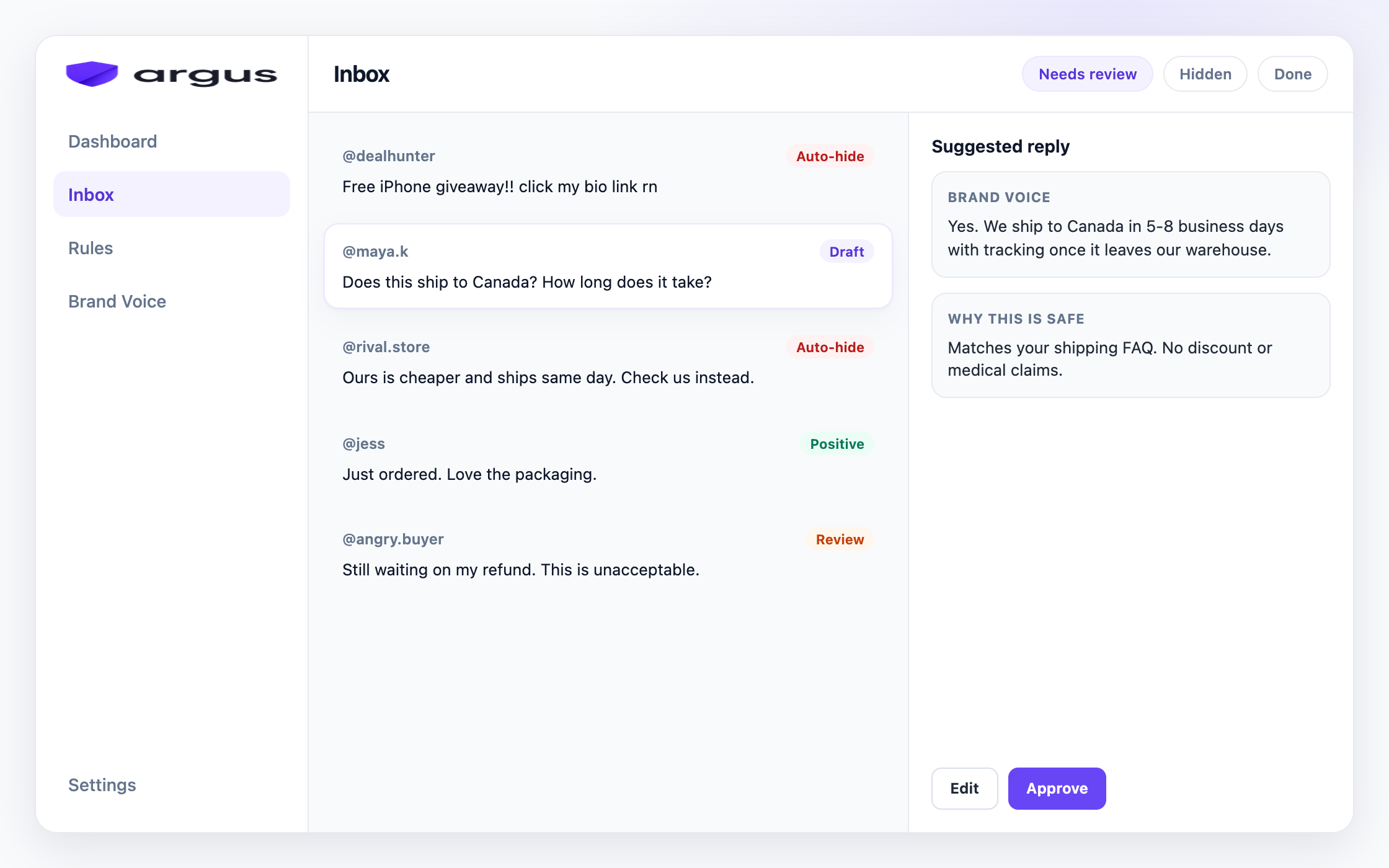
Argus treats competitor mentions as their own category, separate from spam. On the Protection board you choose what happens to them: Auto-hide for clear poaching, Draft for review when you want to answer, Human review for anything ambiguous, or Do nothing when you would rather leave the thread alone. Each mention gets the response your policy says, not the response someone improvized at midnight.
When you do answer, the reply comes from your Brand Voice knowledge: factual, grounded, no mudslinging, drafted for your approval first. The one-calm-answer rule is enforced by the workflow, not by willpower.
Honest scope note: Argus works on public Facebook and Instagram ad comments. It hides from public view rather than deleting, it cannot stop a rival from creating new accounts, and it is not a publishing suite or a DM tool.
FAQ
Hide clear poaching: coupon codes, rival links, “buy elsewhere” bait. Do not hide genuine comparison questions or fair criticism. The first protects your spend; the second protects your reputation.
Yes, when a real shopper asks a genuine comparison question. Answer once, state your difference factually, and stop. Never argue with bait.
No. Lists catch named rivals and known phrases. Soft bait without a brand name (“got this cheaper downtown”) slips through, and broad lists hide your own customers comparing options.
Ban repeat accounts, use account-signal filters for new or fake-looking profiles, document patterns, and do not engage publicly. Organized poaching is a volume problem, not a conversation.
No. Argus hides comments from public view so moderation stays reversible. Delete is not part of the current product.
Auto-hide clear poaching, answer real comparisons, and keep edge cases in review.